 QUINCE M PRO
Location:
Belgrade
Client:
Blister Properties DOO
Project period:
2025-
Building type:
Residential and commercial complex
Projected annual energy extraction:
approximately 2,911 MWh/year
Design:
Geological investigations and geothermal borehole connection design
Construction:
Installation and connection of geothermal boreholes
Permits:
Obtaining exploitation rights – in progress
Geological investigations and geothermal borehole connection design
Construction:
Installation and connection of geothermal boreholes
Permits:
Obtaining exploitation rights – in progress
Nebessa Kvart – Belgrade
The NEBESSA KVART residential and commercial complex is currently under
construction in the Bežanijska Kosa area of Belgrade. It has been conceived as a modern mixed-use
development that brings together the principles of sustainability, energy efficiency and healthy urban
living. Particular attention has been paid to high-quality materials and advanced technical solutions,
including enhanced thermal and acoustic performance and an optimised building envelope.
The building's heating and cooling system uses a bivalent concept based on renewable energy sources. Its primary energy source will be the exploitation of petrogeothermal resources through geothermal boreholes, ensuring stable and efficient operation of the HVAC system throughout the year. The remaining energy demand will be supplied from other sources.
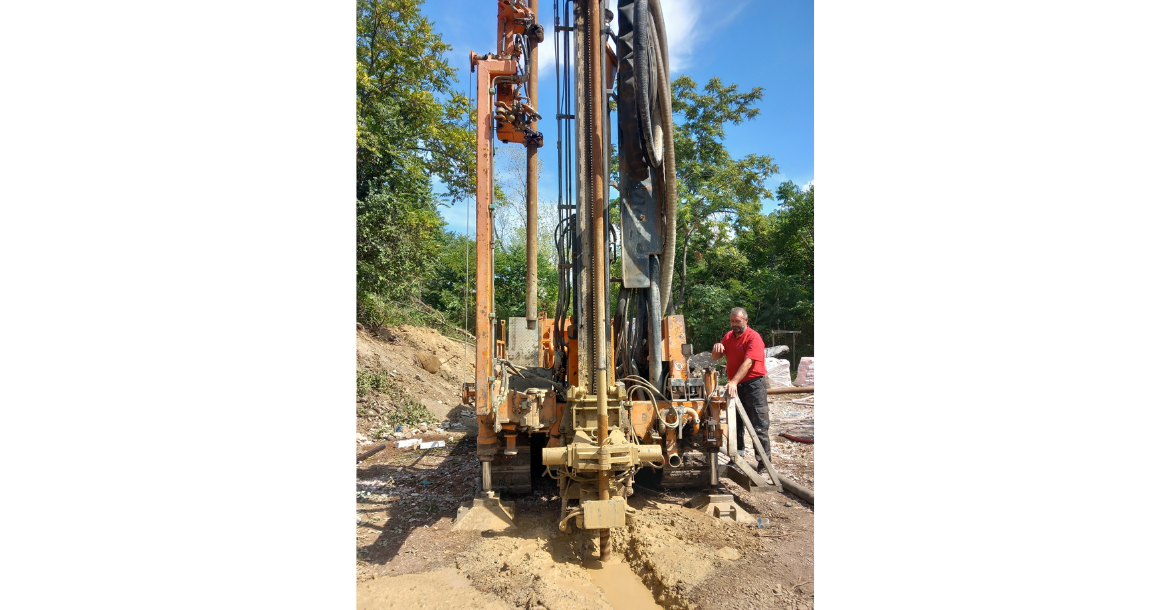
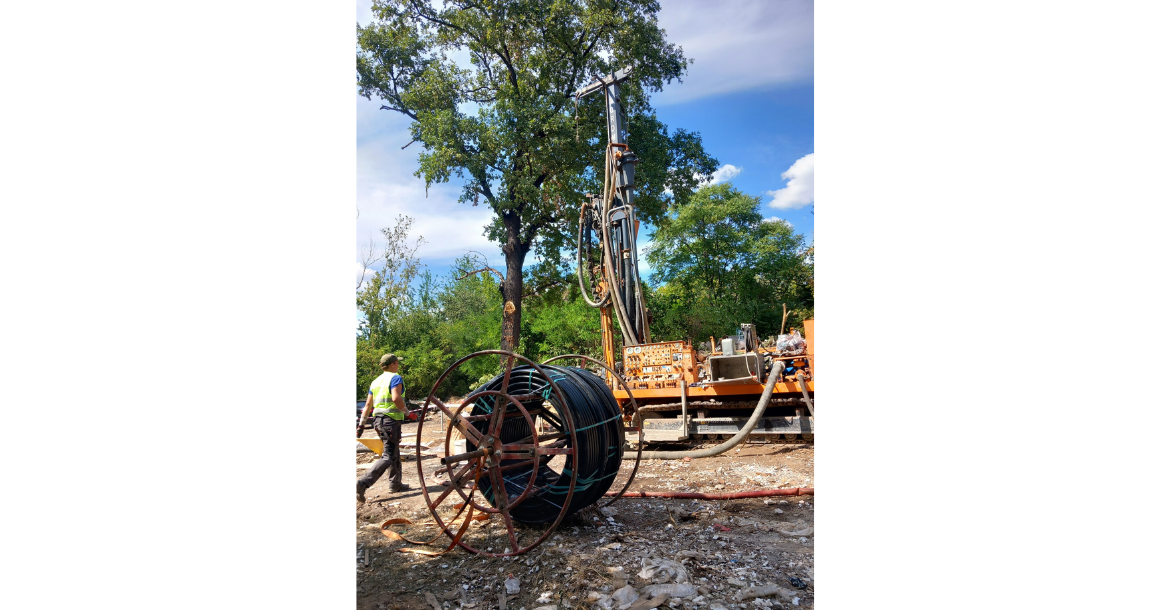
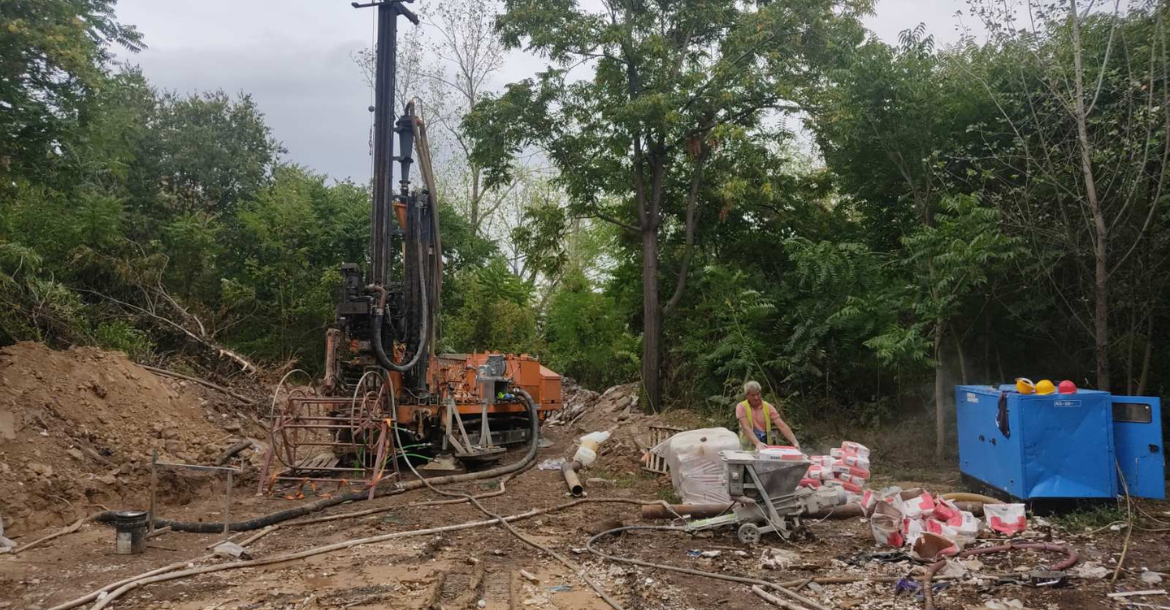
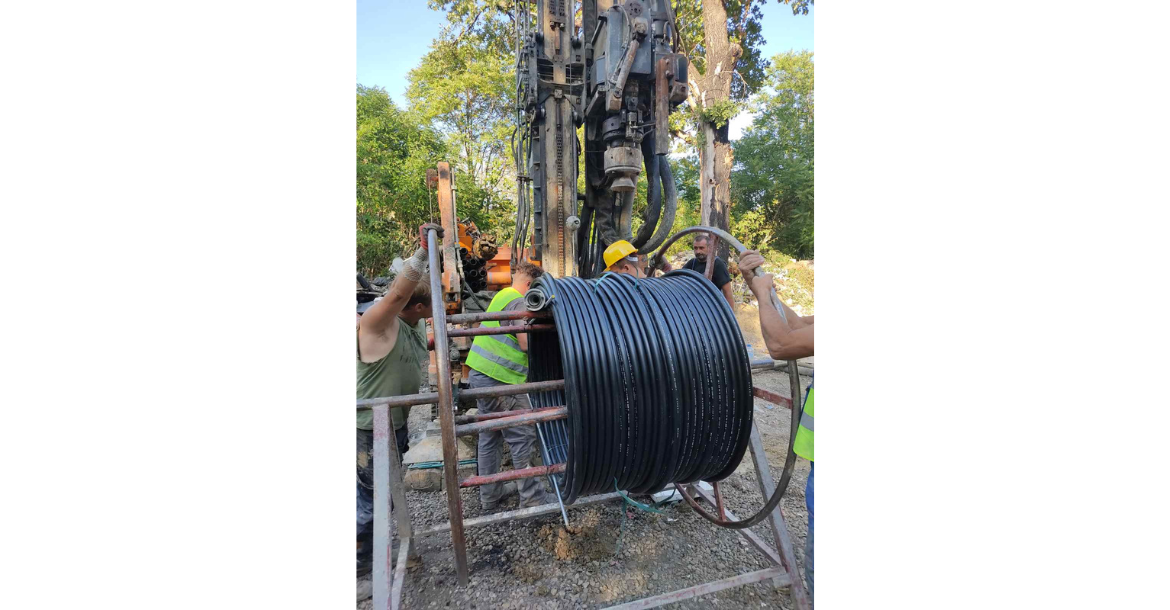
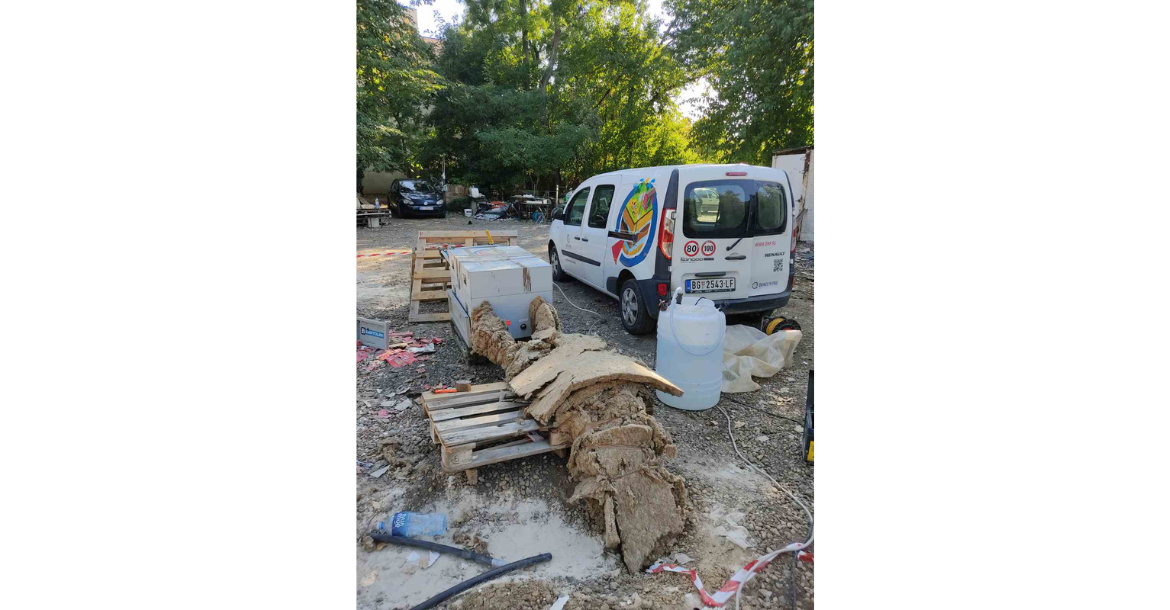
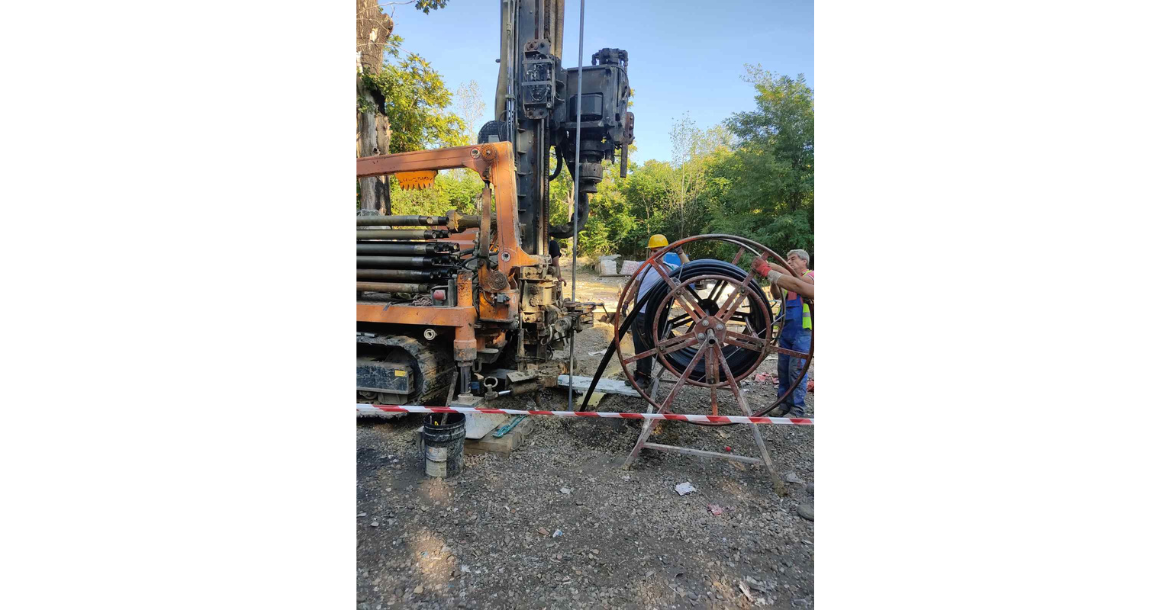
To optimise the petrogeothermal field intended to support the future complex's heating and cooling requirements, three test geothermal boreholes and accompanying petrogeothermal investigations were completed in August and September 2025. All boreholes were drilled using the rotary drilling method: two to a depth of 125 m and one to 100 m. One Rehau PE-Xa probe and one MuoviTech Turbo PE-100 RC probe were installed in the 125 m boreholes, while a MuoviTech Turbo PE-100 RC probe was installed in the 100 m borehole.
Based on the petrogeothermal investigation results and the preliminary annual distribution of the total heating and cooling load, the petrogeothermal system was simulated and optimised. This process defined a geothermal field comprising 120 Rehau double-U geothermal probes made from peroxide-crosslinked PE-Xa polyethylene, each 32 mm in diameter and installed to an individual depth of 125 m.
The building's heating and cooling system uses a bivalent concept based on renewable energy sources. Its primary energy source will be the exploitation of petrogeothermal resources through geothermal boreholes, ensuring stable and efficient operation of the HVAC system throughout the year. The remaining energy demand will be supplied from other sources.
To optimise the petrogeothermal field intended to support the future complex's heating and cooling requirements, three test geothermal boreholes and accompanying petrogeothermal investigations were completed in August and September 2025. All boreholes were drilled using the rotary drilling method: two to a depth of 125 m and one to 100 m. One Rehau PE-Xa probe and one MuoviTech Turbo PE-100 RC probe were installed in the 125 m boreholes, while a MuoviTech Turbo PE-100 RC probe was installed in the 100 m borehole.
Based on the petrogeothermal investigation results and the preliminary annual distribution of the total heating and cooling load, the petrogeothermal system was simulated and optimised. This process defined a geothermal field comprising 120 Rehau double-U geothermal probes made from peroxide-crosslinked PE-Xa polyethylene, each 32 mm in diameter and installed to an individual depth of 125 m.